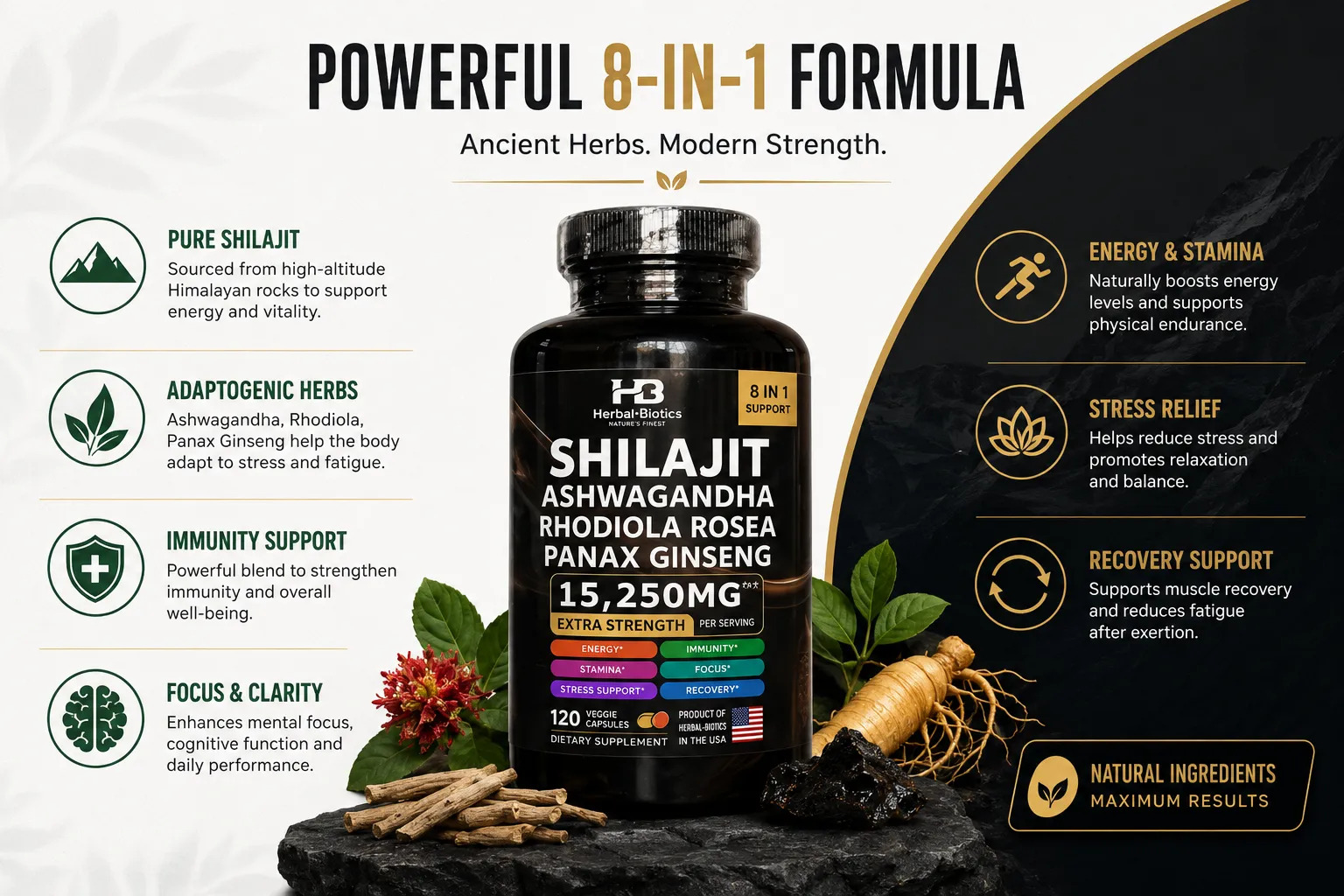
If you are buying a Shilajit Supplement in Nigeria, checking its quality should involve more than looking at how dark it is or dropping a little into water. Those checks can sometimes give you useful clues, but they cannot prove that a product is authentic, chemically pure, properly processed, or free from harmful contaminants.
First, look at the physical product and its label. Then test what can reasonably be tested, preferably through appropriate laboratory analysis. Next, verify the batch documentation, manufacturer information, and applicable NAFDAC information. Finally, decide whether the evidence is strong enough to justify buying or using the product.
This matters because a Shilajit Supplement in Nigeria can look exactly like what you expect Shilajit to look like and still have poor documentation or contamination concerns. Likewise, a bottle carrying the words 100% pure, high fulvic acid, or lab tested has not automatically demonstrated those claims.
In my view, this is the biggest mistake consumers make when evaluating Shilajit. They look for one magic test. There isn’t one. Good quality assessment is about putting several pieces of evidence together.
What Does Shilajit Quality Actually Mean?
“Quality” sounds like one thing, but it is really a combination of several questions. A good Shilajit Supplement in Nigeria should be considered from the standpoint of authenticity, purity, composition, safety, and traceability.
Authenticity
Authenticity asks a basic question: is the material actually Shilajit, or has something else been substituted, diluted, or added?
This is particularly important because a dark, sticky material is not automatically genuine Shilajit. A product can be made to resemble the expected appearance of a resin without having the same chemical profile as genuine material.
That is why appearance is useful for preliminary screening, but chemical identification and appropriate laboratory analysis provide much stronger evidence.
Purity
Purity is about what else is present in the product.
A seller may describe a product as “pure Shilajit,” but consumers should still ask what that means. Does it mean the product contains only Shilajit-derived material? Has it been purified? Has it been diluted? Are other ingredients present? Has the finished product been tested for contaminants?
A label claim is not the same thing as an analytical result.
Composition and Potency
Composition refers to the substances actually present in the product and their measured amounts.
This becomes especially relevant when you see claims about Shilajit fulvic acid. A laboratory may measure fulvic-acid content using a particular analytical approach, but a percentage printed on a website is not meaningful evidence by itself.
A recent analytical study illustrates the complexity of Shilajit chemistry. Researchers used gravimetric analysis for total fulvic acid and ICP-MS to quantify elements, while also using chromatographic techniques to profile other compounds. That is a very different level of evidence from simply putting “85% fulvic acid” on a product label.
Safety
Safety is a separate question.
Even if a material is genuinely Shilajit, that does not automatically tell you whether the finished product is free from problematic levels of contaminants.
Heavy metals such as lead, arsenic, mercury, and cadmium are among the contaminants that deserve attention when evaluating Shilajit. Scientific literature has specifically discussed heavy-metal profiles in Shilajit and the need to consider their potential toxicity.
Traceability
Traceability is the ability to connect the product in your hand to a manufacturer, batch, date, testing record, and applicable regulatory information.
This is why a batch number matters. A Certificate of Analysis for one batch does not automatically prove the contents of another batch.
Good Shilajit quality assessment is therefore not simply about asking, “Does this look real?”
The better question is, “Can I follow the evidence from this particular product back to its source, testing, and regulatory information?”
How Can You Check Shilajit Supplement in Nigeria Quality?
The practical answer is to start with simple observations, but do not stop there.
1. Check the Appearance and Texture
Traditional Shilajit resin is commonly dark brown to nearly black and has a thick, sticky, resin-like appearance. Its consistency can change with temperature. It may become harder when cold and softer when warmed.
Those characteristics can be useful when you are inspecting a product.
They are not authentication certificates.
A seller could provide a dark, sticky material that behaves exactly as a buyer expects and still have no credible evidence about its chemical composition or contaminant levels.
This is where many online “fake Shilajit tests” go too far. They take a characteristic that may be common in genuine material and turn it into a pass-or-fail authentication test.
I wouldn’t treat it that way.
Think of appearance as the first filter. If something looks obviously inconsistent with the product description, that may be a reason to stop and investigate. But if it looks convincing, you simply move to the next stage.
2. Try the Warm-Water Solubility Test
One of the most common home checks involves placing a small amount of Shilajit resin in warm water and observing how it behaves.
A genuine resin may disperse or dissolve into the water, producing a dark solution. Buyers often use this as a way to distinguish resin from products containing obvious insoluble material.
It can be a useful observation, but the important word is observation.
Water solubility does not prove that the material is genuine. It does not tell you the concentration of fulvic acid. It does not tell you whether the product contains lead, arsenic, mercury, or cadmium. It also does not establish whether the product has been properly purified.
A material can dissolve and still have a questionable composition.
The reverse can also be true. Differences in processing, formulation, temperature, concentration, or product form can affect how a sample behaves in water.
So if you perform this test, treat the result as preliminary information rather than a verdict.
3. Check How It Responds to Temperature
Temperature behavior is another commonly discussed characteristic of Shilajit resin.
A resin may become firmer in cooler conditions and softer or more workable when warmed. This makes physical sense for a resin-like material and can help a buyer understand whether the product behaves consistently with its description.
Again, though, temperature behavior is not chemical authentication.
Imagine two samples that both soften when warmed. That tells you something about their physical properties. It does not tell you whether both contain the same compounds, whether either has been adulterated, or whether either has acceptable contaminant levels.
This is a useful distinction to remember throughout your search for pure Shilajit in Nigeria: physical characteristics describe how a substance behaves. Laboratory analysis can tell you much more about what the substance actually contains.
4. Should You Use a Flame Test?
Flame tests appear frequently in online guides claiming to explain how to test Shilajit.
The idea is usually that genuine resin should react in a particular way when exposed to heat or flame.
I would not use this as a definitive authentication method.
Apart from the fact that burning a supplement is not a proper chemical identification procedure, the behavior of a material around a flame can depend on its moisture content, organic components, additives, and other physical characteristics. A particular flame response does not establish purity or safety.
There is also no sensible reason to turn supplement quality testing into an avoidable fire hazard.
If you are trying to determine whether your product is safe to consume, laboratory documentation is far more useful than watching it burn.
5. Check the Product Label
The label is one of the easiest things to inspect and one of the most frequently overlooked.
Start by looking for a clearly stated product name and the ingredients. Then check whether the package identifies the quantity, batch or lot number, manufacturing information, expiry date, manufacturer, and relevant importer or distributor information.
Directions for use and storage instructions should also be clear.
Pay attention to whether the product is described as resin, powder, capsules, or another form. The form matters because you need to compare like with like when examining laboratory results.
A vague label creates a traceability problem.
For example, “Premium Himalayan Shilajit, 100% pure, high fulvic acid” tells you much less than a label that identifies the product, manufacturer, batch, quantity, ingredients, dates, and applicable regulatory information.
The first sounds impressive. The second gives you something you can actually verify.
6. Look for a Batch-Specific Certificate of Analysis
This is one of the strongest practical checks available to an ordinary consumer.
A Certificate of Analysis, commonly called a COA, is a laboratory document reporting the results of tests performed on a particular sample or batch.
But simply seeing the words “COA available” is not enough.
Look at the document itself.
A useful COA should identify the product, batch or lot number, laboratory, testing date, analytical method, measured results, and units. Where relevant, it should include results for fulvic acid and contaminant testing, including heavy metals.
The critical point is the batch number.
Suppose you are holding a jar labeled Batch 2407, but the seller gives you a laboratory report for Batch 2311. That report may be a genuine laboratory document, yet it does not establish that the material in your jar has the same analytical results.
This is why batch-specific evidence matters.
A generic “lab tested” badge is marketing language. A report that identifies the product and batch and provides actual numerical results is evidence you can inspect.
Why Heavy-Metal Testing Matters for Shilajit
Heavy metals deserve special attention because they cannot be evaluated reliably with ordinary household observations.
Shilajit is a complex phyto-mineral material, meaning it contains organic substances as well as mineral and elemental components. Scientific literature has examined its heavy-metal profile and specifically discussed potentially toxic elements.
That does not mean every Shilajit product is dangerous. It means contamination is a quality-control question that should be tested rather than guessed.
Lead
Lead is a toxic metal for which unnecessary exposure is undesirable. It can enter products through environmental contamination or raw-material sources.
The important point for consumers is simple: you cannot look at a dark resin and determine its lead concentration.
Arsenic
Arsenic can occur naturally in environmental materials and can also become a contamination concern.
Its presence and concentration require appropriate analytical testing. A product’s smell, color, or ability to dissolve in water does not provide a reliable arsenic measurement.
Mercury
Mercury is another metal that needs proper laboratory assessment.
Different forms of mercury have different toxicological characteristics, which is one reason simplistic home tests are not appropriate for determining whether a supplement is safe.
Cadmium
Cadmium is another contaminant that can occur in environmental materials.
Once again, the relevant question is not whether the product looks “natural.” The relevant question is whether appropriate testing has measured the contaminant and whether the result meets the applicable specification or safety requirements.
Can You Test Shilajit for Heavy Metals at Home?
Not reliably.
You can inspect the packaging. You can perform basic physical observations. You can compare documents.
But you cannot reliably determine whether Shilajit contains acceptable levels of lead, arsenic, mercury, or cadmium by looking at it, smelling it, tasting it, dissolving it in water, or heating it.
Appropriate laboratory techniques are needed for meaningful heavy-metal analysis. Modern analytical work on Shilajit, for example, has used ICP-MS, an instrumental laboratory method capable of measuring elements at very low concentrations.
That is why heavy-metal testing should be treated as a laboratory question, not a kitchen experiment.
How to Check Fulvic Acid in Shilajit
Fulvic acid receives a lot of attention in Shilajit marketing, but the subject is more complicated than a single percentage printed on a jar.
What Is Fulvic Acid?
Fulvic acid refers to a group of complex organic substances associated with humic materials. Shilajit contains various organic and mineral components, and fulvic substances are among the compounds commonly discussed when describing its composition.
The important point is that Shilajit is chemically complex. It is not simply “fulvic acid.”
Why Is Fulvic Acid Mentioned on Shilajit Labels?
Sellers often highlight fulvic acid because it is a recognizable chemical characteristic associated with Shilajit and because consumers have become familiar with the term.
That does not mean every large percentage claim is automatically credible.
A label saying “90% fulvic acid” should lead to another question: How was that number measured?
Does More Fulvic Acid Automatically Mean Better Shilajit?
No.
A higher reported percentage does not automatically establish that a product is superior.
The result can depend on what material was tested, how the product was processed, what form was analyzed, and which analytical method was used. Scientific work has used specific methods to quantify fulvic acid and other components, demonstrating why methodology matters.
Quality also includes contamination control, traceability, identity, processing, and accurate labeling.
Reducing the entire quality question to one number is simply too simplistic.
How Is Fulvic Acid Verified?
The strongest approach is to look for a laboratory report that identifies the product and batch and states the analytical method and result.
Do not assume that every laboratory uses identical procedures or that percentages from different reports are automatically comparable.
If a seller advertises an unusually specific fulvic-acid percentage, ask for the supporting laboratory documentation.
How to Read a Shilajit Certificate of Analysis
A COA can look intimidating if you have never read a laboratory report before. You do not need to be a chemist to perform a useful first check.
COA item
What you should check
Why it matters
Product name
Does it match the product you are buying?
Prevents unrelated reports being used as evidence
Batch number
Does it match your package?
Connects the report to your actual product
Laboratory
Is the testing laboratory identified?
Makes the report more traceable
Testing date
When was the sample analyzed?
Provides context for the result
Testing method
Is the analytical method identified?
Helps explain how the measurement was obtained
Fulvic-acid result
Is an actual result reported?
Supports a specific composition claim
Heavy-metal results
Are relevant metals reported?
Provides evidence about contamination
Units
Are measurements clearly expressed?
Prevents misunderstanding numerical results
Specifications or limits
Are applicable criteria stated?
Gives the result something meaningful to compare against
Report identification
Is there a report or reference number?
Improves traceability
The batch number deserves particular attention.
Imagine a seller has 500 jars from three different production batches but displays one old COA on the website. The document may be real. The laboratory may be legitimate. Yet it does not automatically prove that all three batches have identical composition and contaminant results.
That is why “we have a COA” is not the end of the conversation.
The better question is, “Can I see the COA that corresponds to this batch?”
How to Verify a Shilajit Supplement in Nigeria
For buyers in Nigeria, laboratory documentation is only part of the picture. You should also consider applicable regulatory verification.
Check the NAFDAC Number
If a product is presented as a regulated dietary supplement, look for the applicable NAFDAC registration information on the packaging and documentation.
Nigeria’s current NAFDAC dietary supplement regulations state that a dietary supplement is not to be manufactured, imported, exported, advertised, sold, or distributed in Nigeria unless it has been registered in accordance with the regulations.
That makes regulatory status worth checking rather than simply accepting a number printed on a label.
Use NAFDAC’s Product Verification Resources
NAFDAC currently provides an online product verification facility where users can enter a NAFDAC number to verify product information.
The agency’s current regulatory portal also provides facilities for verifying product registrations and other NAFDAC-issued documents.
Use the official source rather than relying solely on a screenshot supplied by a seller.
Check the NAFDAC Greenbook
The NAFDAC Greenbook provides searchable information on registered products, including a category for herbals and nutraceuticals.
Where relevant, checking the product information against an official NAFDAC resource can help establish whether the regulatory information presented by a seller corresponds with an actual record.
Check the Manufacturer or Importer
A traceable manufacturer or importer gives you another piece of evidence.
If the packaging does not clearly identify who made or supplied the product, or the company information cannot be independently connected to the product, be cautious.
There is an important distinction here.
NAFDAC verification and laboratory testing answer different questions.
Regulatory verification helps establish whether the product and its registration information correspond with an official regulatory record. Laboratory testing provides analytical information about the particular material tested.
One should not be treated as a substitute for the other.
Can You Check Shilajit Quality at Home?
You can perform simple home checks, but you cannot fully confirm Shilajit purity or safety at home.
A useful way to think about the common tests is this:
Home check
What it may tell you
What it cannot prove
Appearance
Whether the product looks physically consistent with a resin
Authenticity or chemical purity
Texture
Whether the material behaves like a resin
Composition or safety
Warm-water test
How the material behaves in water
Fulvic-acid content or heavy-metal safety
Temperature test
How consistency changes
Chemical identity
Flame test
Limited physical behavior around heat
Authenticity, purity, or safety
Label inspection
Whether important information is provided
Whether the claims are scientifically true
This is why I would use home tests as screening tools, not certification tools.
If a product fails an obvious physical or labeling check, that may be enough reason to avoid it. But passing those checks should not make you stop investigating.
A jar can pass the water test and still have no credible heavy-metal report.
Red Flags of Poor-Quality Shilajit in Nigeria
One of the clearest warning signs is a missing batch number. Without a batch identifier, connecting the product to a specific manufacturing run or laboratory report becomes much harder.
Another concern is the absence of a meaningful COA. A seller does not necessarily have to provide a glossy laboratory document on the product page, but if they make strong purity, fulvic-acid, or safety claims and cannot provide supporting documentation when asked, that weakens the evidence.
A COA that does not match the batch is another important warning sign. The laboratory report might be genuine, but it may not represent the product being sold to you.
Unverifiable NAFDAC information should also make you pause. The same applies to vague manufacturer details, unclear ingredients, or packaging that gives you no practical way to trace the product.
Be particularly skeptical of dramatic health promises. Claims that Shilajit can cure diseases or deliver guaranteed medical or sexual outcomes are not substitutes for product-quality evidence.
Finally, an unsupported fulvic-acid number should not impress you simply because it is large. Ask how it was measured and whether the result comes from the batch you are buying.
Does a Higher Fulvic Acid Percentage Mean Better Shilajit?
Not necessarily.
A higher reported fulvic-acid percentage may sound impressive, but it does not tell the entire quality story.
You also need to consider how the measurement was obtained, what product form was tested, how the material was processed, and whether the result can be connected to the actual batch being sold.
Most importantly, safety testing still matters.
A product with an attractive fulvic-acid number but weak traceability and no meaningful contaminant testing is not automatically a better product than one with a more modest reported figure and stronger documentation.
The sensible approach is to treat fulvic acid as one analytical characteristic rather than a universal quality score.
Resin vs Powder vs Capsules: Which Is Easier to Check?
Shilajit resin is often the easiest form to inspect physically because you can see and handle the material directly. Its texture, color, consistency, and behavior can be observed.
That does not make resin automatically purer.
Powder is less visually distinctive, and a consumer cannot reliably identify its chemical composition simply by looking at the powder. Documentation becomes even more important.
Capsules add another layer because the capsule may contain Shilajit extract alongside other ingredients. You need to know what is actually inside the capsule and in what quantity.
The form itself does not determine quality.
When comparing resin, powder, and capsules, compare the same fundamental evidence: the identity of the product, ingredients, manufacturer, batch number, expiry information, applicable regulatory information, COA, analytical results, and contaminant testing.
A well-documented capsule can be a better-evidenced purchase than poorly documented resin.
Questions to Ask a Shilajit Seller Before Buying
Start by asking where the Shilajit comes from and whether it has been purified. You can then ask for the batch number of the product currently being sold and request the COA for that specific batch.
Ask which laboratory performed the testing and whether the report includes heavy-metal analysis. If the seller advertises a fulvic-acid percentage, ask how fulvic acid was measured and whether the result belongs to the same batch.
You should also ask for the applicable NAFDAC information and whether you can independently verify it through an official NAFDAC resource.
Finally, ask exactly what is included in the product. This is particularly important with powder and capsules because the product may contain additional ingredients.
A good seller should understand these questions. You are not asking for trade secrets. You are asking for basic evidence behind the claims being made about something you are expected to consume.
How to Buy a Quality Shilajit Supplement in Nigeria
Start with the packaging, not the marketing story.
Look for clear product identification, ingredients, quantity, manufacturer information, batch number, expiry date, storage instructions, and applicable NAFDAC information. If the product is marketed as a dietary supplement, its regulatory status should be independently checked rather than accepted because a number appears on the label.
Then move to the laboratory evidence.
Look for a batch-specific COA that identifies the product and laboratory and reports actual analytical results. Pay particular attention to heavy-metal testing and any fulvic-acid claim being advertised.
Finally, consider traceability.
A product sold through a traceable seller, with identifiable manufacturing information and documentation that connects the product in your hand to its testing record, gives you a much stronger basis for a purchasing decision.
The goal is not to find the product with the most impressive advertising.
The goal is to find the product with the strongest evidence.
Conclusion
Checking a Shilajit Supplement in Nigeria properly is not about finding a magic home test. A dark color, sticky texture, water solubility, temperature response, or even a convincing-looking resin can provide clues, but none of these things can establish complete purity or safety. The same applies to impressive phrases such as “100% pure,” “high fulvic acid,” or “lab tested.” A claim becomes much more useful when you can connect it to credible evidence.
The most practical approach is to remember LOOK → TEST → VERIFY → DECIDE. Look at the physical product and label. Test through appropriate laboratory analysis when composition or contamination matters. Verify the batch documentation, manufacturer information, and applicable NAFDAC status. Then decide whether the evidence is strong enough to justify the purchase. Heavy-metal testing deserves particular attention because no home appearance or water test can reliably tell you whether a product contains problematic levels of lead, arsenic, mercury, or cadmium.
In the end, good Shilajit buying is less about becoming an expert in identifying resin by sight and more about becoming a better evaluator of evidence. Physical checks can give you clues. A batch-specific COA can give you analytical information. NAFDAC verification can provide regulatory context. Traceability connects those pieces to the product you are actually buying. When the evidence is missing, inconsistent, or impossible to verify, the sensible response is not to guess. Choose evidence over marketing.
FAQs
How can I tell if Shilajit is genuine?
There is no single home test that can reliably prove that Shilajit is genuine. You can examine its appearance, texture, smell, consistency, and behavior in warm water as preliminary checks. Genuine Shilajit resin is commonly dark brown to nearly black and may become softer when warmed and firmer when cold. However, these physical characteristics can be imitated by other materials, so they should be treated as clues rather than proof.
A stronger way to assess a Shilajit Supplement in Nigeria is to look for evidence beyond the product itself. Check whether the manufacturer is identifiable, whether the product has a batch number, whether a batch-specific Certificate of Analysis (COA) is available, and whether the applicable NAFDAC information can be independently verified. Laboratory testing provides much stronger evidence about composition and contaminants than a home water or texture test.
Does real Shilajit dissolve in water?
Real Shilajit resin can dissolve or disperse in warm water, which is why the warm-water test is often recommended in online guides. You may notice the resin gradually breaking down and producing a dark-colored solution. This can be a useful physical observation when examining a product you have purchased.
However, water solubility does not prove authenticity or purity. A material can dissolve in water and still contain unwanted substances or contaminants. The test also cannot tell you how much fulvic acid the product contains or whether it contains potentially harmful levels of lead, arsenic, mercury, or cadmium. For those questions, appropriate laboratory testing is necessary.
Can I test Shilajit at home?
You can perform simple physical checks at home, and they can be useful for spotting obvious inconsistencies. Looking at the color and texture, observing how resin changes with temperature, and checking how it behaves in warm water can give you some preliminary information. These checks are inexpensive and do not require specialist equipment.
The important limitation is that home testing cannot fully establish Shilajit purity or safety. You cannot reliably determine heavy-metal contamination, confirm a specific fulvic-acid percentage, or establish the complete chemical identity of a product using household tests. If a seller makes strong claims about purity or composition, the better evidence is a credible laboratory report that relates specifically to the batch you are buying.
Does genuine Shilajit contain fulvic acid?
Fulvic acid, or more accurately fulvic substances, is associated with the complex organic composition of Shilajit and is one of the components commonly discussed in scientific studies and commercial product descriptions. This is why you will frequently see Shilajit fulvic acid claims on labels and websites. The presence of fulvic substances, however, does not mean every product will contain the same concentration.
If a seller advertises a specific fulvic-acid percentage, it is reasonable to ask how that figure was obtained. Different analytical approaches and product characteristics can affect reported results, so a percentage should not simply be accepted because it appears on packaging. A credible laboratory report identifying the product, batch, testing method, and actual result provides much stronger evidence than a marketing claim.
Does higher fulvic acid mean better Shilajit?
No. A higher reported fulvic-acid percentage does not automatically mean that the Shilajit is better, purer, or safer. Fulvic acid is only one part of a much larger quality assessment. You also need to consider the identity of the material, processing, other ingredients, contaminant testing, labeling, manufacturer information, batch traceability, and the reliability of the laboratory evidence behind the claim.
This is especially important when comparing a Shilajit Supplement in Nigeria. A product advertising an extremely high fulvic-acid number may sound impressive, but that number means little if the seller cannot explain how it was measured or provide a COA for the actual batch being sold. Rather than choosing solely on the highest percentage, look at the overall evidence supporting the product’s quality and safety.
Rate this business
Have you heard of this business? Do you like it? How do you like it?
Check out if it is in the list of Top Rated Small Businesses