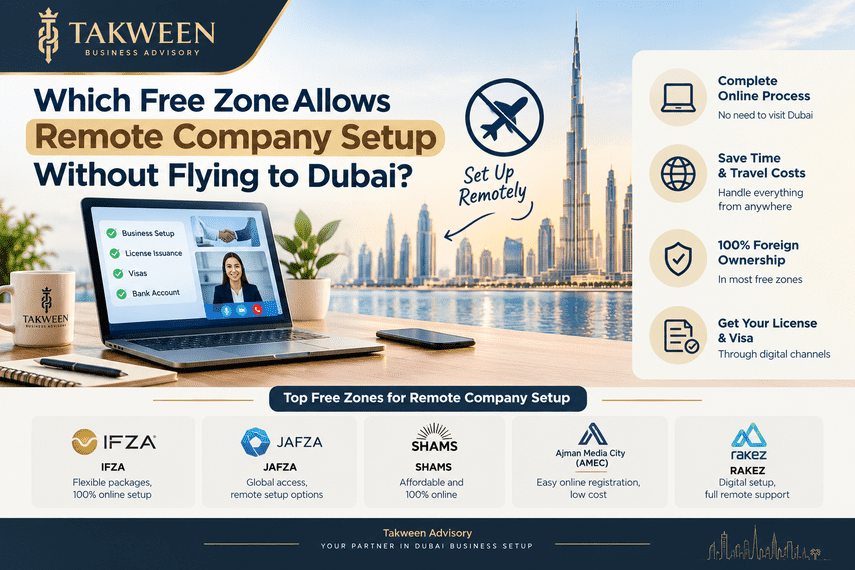
One of the biggest misconceptions holding back international entrepreneurs from starting a business in the UAE is the assumption that you need to physically fly to Dubai, sit in government offices, and sign a stack of paperwork in person. That used to be true – but it isn’t anymore. In 2026, most of Dubai’s leading free zones offer fully digital incorporation, meaning you can complete an entire free zone company setup in Dubai from your laptop, wherever you happen to be in the world. This guide looks at which free zones actually deliver on that promise, what “remote setup” really includes, and where you may still need to show up in person down the line.
Is Remote Company Setup in Dubai Actually Legal and Common?
Yes, and it’s now the norm rather than the exception. The Dubai government has made it possible for non-residents to incorporate and own a free zone company entirely online, with the process built around digital KYC, e-signatures, and video verification for identity checks. Free zone authorities across the emirate allow founders to complete the entire setup process online without visiting the UAE, which has made free zone company setup in Dubai genuinely accessible to entrepreneurs who have never set foot in the country.
It’s also worth understanding an important distinction upfront: a business license and a residence visa are two separate things. You can hold a free zone business license and own a company without ever applying for a UAE residence visa – which is exactly what makes full remote incorporation possible for founders who simply want a UAE-registered entity without relocating.
Free Zones Known for Fully Remote Setup
While the general rule is that almost every Dubai free zone now supports remote incorporation, a handful stand out for making the process especially fast and founder-friendly for people who never plan to visit.
IFZA (International Free Zone Authority) is widely regarded as one of the strongest options for non-resident founders, with genuine support for remote business setup from start to finish. Most remote business setups here are 100% digital – documents are submitted, signed electronically, and licenses issued online without any need to visit the UAE. The registration process is identical whether the shareholder is an individual or a corporate entity, though the required supporting documents vary between the two.
Meydan Free Zone has built its offering specifically around speed and digital-first onboarding. With its fully digital platform, entrepreneurs can register a company and go live in under 60 minutes using the Fawri License, an expedited process that removes most of the traditional bureaucratic delays associated with company formation. Most of Meydan’s free zone company setup process can be completed remotely, making it a strong choice for founders prioritizing speed.
Dubai South has positioned itself as one of the more founder-friendly free zones for international entrepreneurs, offering streamlined digital onboarding aimed at business owners who want to enter the UAE market without an early trip.
DIFC (Dubai International Financial Centre), typically associated with financial services and fintech, has also seen a significant shift toward remote incorporation. In 2025, over 38% of new DIFC Innovation Licences were issued to founders who had never set foot in the UAE before incorporation – a clear signal that even premium, heavily regulated free zones have adapted to remote-first company formation.
What “Remote Setup” Actually Includes
When people research free zone company setup in Dubai remotely, it helps to know exactly what stages of the process can genuinely be done online versus what still requires a physical presence at some point. Typically, remote setup covers business activity selection and trade name reservation, done entirely through the free zone’s online portal; document submission, including passport copies, proof of address, and, for corporate shareholders, parent company documents, uploaded digitally; digital KYC and identity verification, often via video call or facial recognition software rather than in-person biometric checks; e-signing of incorporation documents, where legally binding digital signatures replace the need for notarized in-person paperwork; and finally license issuance, with the final trade license delivered digitally, sometimes within hours or a few working days.
Where You Might Still Need to Visit in Person
While the license itself can be issued entirely remotely in most free zones, there are two areas where founders often still need to travel to the UAE. The first is visa stamping – if you later decide to apply for a UAE residence visa, which is optional and separate from the business license, you’ll typically need to visit for medical tests and Emirates ID biometrics. The second is bank account opening, which is usually the biggest sticking point. Most UAE banks still require an in-person meeting to open a corporate bank account, even if the company itself was formed entirely online. Some digital-first banks and fintech providers have started offering non-resident-friendly account opening, but a physical visit is still the norm for traditional banks.
This means you can genuinely launch and own a UAE-licensed business – and in some cases even access non-resident banking options – without relocating or making an early trip, but a fully “zero-visit-ever” experience is still the exception rather than the rule once banking and visas enter the picture.
Typical Costs for Remote Free Zone Setup
Costs vary significantly depending on the free zone tier you choose. Budget-tier zones like IFZA, Meydan, and Dubai South generally charge between AED 12,000 and AED 15,000 for the license itself. Mid-tier zones such as DMCC, Internet City, and Media City typically run AED 20,000 to AED 25,000. Premium zones like DAFZA and DIFC can range from AED 25,000 up to AED 50,000 or more.
On top of the license fee, founders should budget for a flexi-desk or virtual office, generally around AED 5,000 to AED 10,000 annually, establishment and immigration cards at roughly AED 1,500 each annually, and visa costs if applicable, typically AED 4,000 to AED 5,000 per person plus medical and Emirates ID fees.
Why Choosing the Right Free Zone Matters
Not every free zone is a perfect fit for every business model, even among those offering remote setup. Some zones specialize in specific industries – DIFC for financial services, DMCC for commodities trading, Dubai Internet City for tech – and choosing based on your actual activity, rather than just remote-setup convenience, affects everything from your licensing scope to future banking relationships and credibility with clients. A zone that’s fast and cheap for a consulting business might not be the right structure for an e-commerce brand planning to scale into physical fulfillment later.
This is where the value of experienced guidance really shows. A consultancy like Takween Advisory can help match your business activity to the right free zone, manage the entire remote application process on your behalf, and flag in advance which steps – like banking – may still require a trip, so there are no surprises once your license is already issued.
Final Thoughts
Flying to Dubai before you can legally own a business there is no longer a requirement – it’s an outdated assumption. Free zones like IFZA, Meydan, Dubai South, and even premium zones like DIFC have built genuinely remote-first incorporation pathways, letting international founders complete a full free zone company setup in Dubai from anywhere in the world. The one caveat worth planning for is banking: while your license can be entirely digital, opening a corporate bank account still typically calls for an in-person visit at most traditional UAE banks. Plan around that one step, and the rest of the journey – from activity selection to license issuance – can genuinely happen without ever boarding a flight.
Rate this business
Have you heard of this business? Do you like it? How do you like it?
Check out if it is in the list of Top Rated Small Businesses