The insurance industry is entering a new phase where catastrophe risks are becoming more unpredictable, frequent, and complex. Traditional catastrophe management methods have helped insurers evaluate potential losses for decades, but changing risk patterns are creating new challenges.
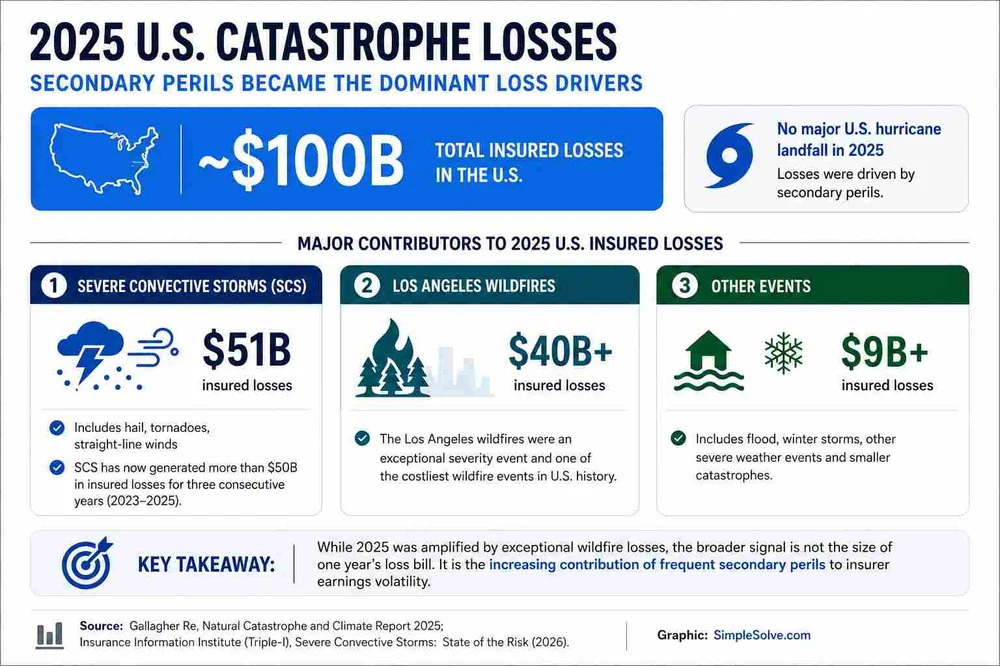
Historically, insurers focused on major catastrophic events such as hurricanes, earthquakes, and large-scale floods. However, the growing impact of secondary perils, including wildfires, severe storms, and regional flooding, has changed how insurers approach risk management.
To manage these evolving challenges, insurers are increasingly adopting technology-driven strategies that provide continuous visibility into changing exposures. Continuous cat monitoring is becoming an important solution for improving risk awareness, strengthening underwriting decisions, and helping insurers respond faster to emerging threats.
The Changing Reality of Catastrophe Risks
Catastrophe risks are no longer limited to rare events with extreme losses. Many insurers are now facing repeated smaller events that create significant cumulative impacts over time.
Secondary perils are becoming a major concern because they occur more frequently and can affect multiple regions simultaneously. Severe convective storms, wildfires, hail events, and flash floods are examples of risks that can generate consistent claims activity.
These changes make it more difficult for insurers to rely only on historical information. Risk conditions can shift quickly due to environmental changes, property development, and climate-related factors.
A modern insurance approach requires updated information and improved visibility into exposure conditions.
Understanding Continuous Cat Monitoring
Continuous cat monitoring refers to the ongoing tracking and analysis of catastrophe risks using advanced technology, real-time data sources, and analytical tools.
Unlike traditional approaches that evaluate catastrophe exposure periodically, continuous monitoring provides insurers with updated insights throughout the policy lifecycle.
This approach can include:
Real-time weather information
Satellite-based observations
Geographic risk analysis
Exposure data updates
Automated catastrophe alerts
By continuously evaluating risk conditions, insurers can better understand how exposures change over time.
Improving Exposure Awareness for Insurers
One of the biggest challenges in catastrophe management is maintaining accurate exposure information.
Insurance portfolios are constantly changing. New properties are added, geographic risks evolve, and environmental conditions can create new vulnerabilities.
Without updated exposure visibility, insurers may underestimate potential losses or fail to identify areas with increasing risk concentration.
Through continuous cat monitoring, insurance companies can improve their understanding of:
High-risk locations
Changing weather patterns
Portfolio accumulation
Emerging catastrophe threats
This allows insurers to make more informed decisions and develop stronger risk management strategies.
Supporting Better Underwriting Decisions
Underwriting accuracy depends on access to reliable and current information. Traditional models may provide valuable insights, but they may not fully capture rapidly changing catastrophe conditions.
Continuous monitoring helps underwriting teams evaluate risks using updated information rather than relying only on historical assumptions.
This enables insurers to:
Improve risk selection
Adjust pricing strategies
Identify potential exposure issues
Create more balanced portfolios
By incorporating current catastrophe intelligence, insurers can make decisions that better reflect actual risk conditions.
Managing the Growing Challenge of Secondary Perils
Secondary perils have become one of the most difficult areas of catastrophe management because they often develop quickly and create frequent losses.
Unlike major catastrophes that receive significant attention, smaller recurring events can accumulate into substantial financial impacts.
Continuous monitoring helps insurers identify these patterns earlier and understand how repeated events affect their portfolios.
For example, insurers can track changing risks related to:
Increased wildfire activity
Frequent storm events
Regional flooding trends
Severe weather conditions
This proactive approach allows companies to prepare before losses increase.
The Role of Technology in Catastrophe Monitoring
Technology is transforming how insurers analyze and manage catastrophe exposure. Advances in artificial intelligence, machine learning, satellite data, and cloud-based analytics are providing deeper risk insights.
These solutions help insurers process large amounts of information and identify potential threats faster.
Technology-driven catastrophe monitoring supports:
Faster risk assessments
Improved forecasting capabilities
Better portfolio analysis
More effective loss prevention strategies
As data availability continues to improve, insurers will have greater opportunities to strengthen catastrophe resilience.
Creating a More Proactive Insurance Strategy
The future of catastrophe management depends on moving from reactive responses toward proactive risk management.
Waiting until after a catastrophe event occurs can create financial pressure for both insurers and policyholders. Continuous access to risk information allows organizations to identify issues earlier and take preventive actions.
By using advanced monitoring solutions, insurers can improve operational efficiency and build stronger long-term strategies.
The Future of Catastrophe Risk Management
As catastrophe risks continue to evolve, insurers need solutions that provide flexibility, accuracy, and speed. Traditional models remain valuable, but they must be supported by modern technology and real-time insights.
Continuous cat monitoring represents a major advancement in how insurers understand and manage catastrophe exposure. It provides the visibility needed to handle changing risks and improve decision-making.
Insurance companies that adopt continuous monitoring capabilities will be better prepared to manage emerging challenges and create more resilient catastrophe management frameworks.
Conclusion
The complexity of modern catastrophe risks requires insurers to adopt smarter and more dynamic strategies. Frequent secondary perils, changing environmental conditions, and increasing exposure levels make traditional approaches alone insufficient.
By implementing continuous cat monitoring, insurers can gain better risk visibility, improve underwriting accuracy, and respond more effectively to catastrophe threats.
As the insurance industry continues to evolve, continuous monitoring will become an essential part of building stronger, data-driven catastrophe risk management strategies.
For more details click here: AI-native insurtech vendor