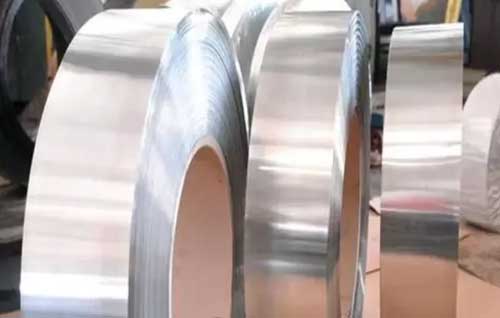
Nickel-based alloys play a vital role in high temperature and corrosion resistant industries such as refining, marine, and power generation. Inconel 600 Strip is widely recognized for its outstanding resistance to oxidation and carburization. It can withstand temperatures up to 1100°C. This material is produced in thicknesses ranging from 0.05 mm to 3 mm and generally meets ASTM B168 and AMS 5540 requirements. It possesses favorable mechanical properties with tensile strength of about 550 MPa in annealed condition.
Through various procurement points in Riyadh, Dammam, and Al Khobar, customers have been mainly concerned about strip materials that have uniform grain structure, tightly controlled dimensions, and surface finishes like bright annealed or cold rolled. Documents such as EN 10204 3.1 and third party inspection reports are normally required for the suppliers to be approved. Websites such as pipingmaterial.sa facilitate the sourcing process by enabling industries to locate verified suppliers and get in touch with authentic buyers. Resistance to chloride stress corrosion cracking, coefficients of thermal expansion, and behavior under cyclic heating that is typical of furnace components and heat exchangers are some of the aspects considered for evaluation.
Meanwhile, alloys that have been precipitation hardened are generally picked in situations where strength is of higher priority. For example, the Inconel 718 Plate can achieve a tensile strength of over 1200 MPa and is highly resistant to fatigue. According to ASTM B670 and ASME SB670, plates can be found in thickness from 6 mm up to more than 100 mm. In places like Jeddah, factors influencing sourcing include heat treatment states, weldability, and machining characters, which altogether confirm suitability with hard-trained applications such as turbine casings, pressure vessels, and subsea equipments, all of which are subjected to severe mechanical and thermal stress factors.
0
Rate this business
Have you heard of this business? Do you like it? How do you like it?
Check out if it is in the list of Top Rated Small Businesses