AI Training for Healthcare | AI Skills Guide

AI Training for Healthcare (Complete Guide to Build an AI-Ready Healthcare Team)

Introduction
Regardless of how advanced a healthcare organization is, one thing remains essential to successful digital transformation:

πŸ‘‰ Your people

Today, healthcare organizations can face challenges such as:

– Time-consuming administrative work

– Large amounts of healthcare information

– Repetitive documentation

– Increasing operational demands

– Difficulty adopting new AI technologies

– Limited practical AI knowledge among employees

Consequently:

πŸ‘‰ Productivity can decline

πŸ‘‰ Administrative workloads can increase

πŸ‘‰ Teams may spend less time on higher-value responsibilities

Because of this, healthcare organisations are now seeking out training in AI for healthcareβ€”training which helps healthcare professionals and teams to understand and apply AI effectively and responsibly.

This guide will teach you:

βœ” What AI training for healthcare means

βœ” Why healthcare teams need AI training

βœ” How AI can support healthcare workflows

βœ” What an effective training program should include

βœ” How to build an AI-ready healthcare workforce

What role does AI training play in healthcare?
AI training enables healthcare professionals to learn about the ways in which artificial intelligence can assist them with their daily duties and the various workflows within their organisations.

It can include:

βœ” AI productivity tools

βœ” Documentation support

βœ” Data analysis

βœ” Research assistance

βœ” Workflow automation

βœ” Administrative productivity

βœ” AI-supported decision-making

The aim is not merely to give healthcare professionals a understanding of artificial intelligence.

The aim is to enable healthcare teams to use AI in a practical, responsible manner, together with the necessary human supervision.

The Significance of AI Training for Healthcare
While managing their complex operational and professional duties, healthcare organizations deal with large amounts of information.

Without proper AI training:

❌ Employees may underuse available AI tools

❌ Repetitive administrative work can continue

❌ Teams may struggle to identify useful AI applications

❌ AI-generated information may not be reviewed appropriately

With effective training:

βœ” Teams can improve productivity

βœ” Routine workflows can become more efficient

βœ” Information can be processed more effectively

βœ” Employees can use AI tools more confidently

βœ” Healthcare organizations can strengthen their digital capabilities

For healthcare organizations, the process of training in AI is not just about taking up new technology; it is about getting people ready to use it effectively while ensuring that professional judgment and proper supervision remain at the heart of things.

Typical AI Challenges Faced by Healthcare Organizations
1. There is a lack of practical knowledge regarding AI.

Even though healthcare professionals may realise that AI is important they might not know how to put it into practice in relation to their own duties.

2. Repetitive Administrative Work

The time required for documentation, scheduling, communication, research, and the management of information can be considerable.

3. Rapidly Changing Technology

New AI tools and applications keep on appearing, so it becomes difficult for teams to decide which ones are useful.

4. Accuracy and Human Supervision

Since healthcare is a highly sensitive area, any information generated by AI must be carefully reviewed and should not take the place of proper professional judgment.

It is important to have structured AI training in the field of healthcare.

What does the training of AI in the field of healthcare involve?
1. AI Productivity

Healthcare teams can gain the skills needed to use AI for carrying out tasks such as drafting, summarising, carrying out research, communicating, planning, and others of a routine nature.

2. Documentation Support

AI can help with the process of organizing and summarizing information, allowing teams to enhance their documentation workflows while still carrying out proper reviews.

3. Healthcare Data Analysis

People can look into the ways in which AI can help with the organization and analysis of information, provided that the relevant policies and safeguards are followed.

4. Workflow Automation

Teams are able to spot administrative processes that are repeated and where AI could improve efficiency.

5. The use of AI in healthcare administration

Administrative teams can find out how AI might assist with communication, scheduling workflows, reporting, and operational tasks.

6. Raising awareness among healthcare professionals about AI

Healthcare professionals can gain a practical understanding of the capabilities, limitations, appropriate use, and the need for human oversight of AI.

Characteristics of Effective AI Training
Before choosing an AI training program, make sure it provides:

βœ” Practical Learning
Effort should be directed towards applications in real healthcare work environments rather than relying solely on theory.

βœ” Hands-On Practice
Participants should in fact work with the relevant AI tools.

βœ” Role-Based Learning
The clinical, administrative, managerial, and support teams might need different AI applications.

βœ” Responsible AI Awareness
Training should stress the importance of handling information appropriately, ensure that there is human oversight, maintain accuracy, and implement the solution in a responsible manner.

βœ” Long-Term Learning
As AI keeps on developing, healthcare teams must have their skills constantly improved.

The Biggest Mistake Healthcare Organizations Make
It is believed by a great many organizations that it is sufficient merely to introduce AI tools.

But:

It is not the case that AI tools automatically form AI-ready healthcare teams.

Without proper training:

❌ Tools may remain underused

❌ Employees may use AI inefficiently

❌ Traditional workflows may continue

❌ AI-generated information may not be reviewed appropriately

The real advantage comes from:

πŸ‘‰ AI Tools + Trained Professionals + Responsible Implementation = Better Results

What makes up a healthcare team that is ready for use with AI?
To build an AI-ready healthcare organization, teams should:

πŸ”Ή Identify repetitive and time-consuming tasks

πŸ”Ή Train employees according to their roles

πŸ”Ή Introduce relevant AI tools

πŸ”Ή Create practical AI workflows

πŸ”Ή Establish appropriate human oversight

πŸ”Ή Monitor productivity and performance

πŸ”Ή Continue developing AI skills

The aim is to develop a workforce that does not just use AI but one that knows when and how it can assist with its duties.

AI Training: The True Healthcare Advantage
Modern healthcare organizations are moving toward:

πŸ‘‰ AI-enabled healthcare operations

What is needed here is more than just technology.

It requires:

● AI-skilled professionals

● Trained administrative teams

● Practical workflows

● Responsible implementation

● Continuous learning

● Clear objectives

Result:

βœ” Improved productivity

βœ” Reduced repetitive work

βœ” More efficient administrative processes

βœ” Better use of technology

βœ” Stronger digital capabilities

Who ought to think about AI training?
AI training can benefit:

● Healthcare professionals

● Doctors and clinical teams

● Nurses and support teams

● Healthcare administrators

● Hospital management

● Medical researchers

● Healthcare operations teams

● Healthcare organizations

How to Choose the Best AI Training Program
Follow this checklist:

βœ” Define your objective:

What about productivity? What about administration? And what about data analysis?

βœ” Check practical experience

Knowledge of AI in the real world is important.

βœ” Concentrate on results

Not merely theoretical AI concepts.

βœ” Look for hands-on training

People ought to learn through applying AI to real-world workplace tasks.

βœ” Choose role-specific training

Various healthcare functions call for different AI applications.

βœ” Seek long-term value

Training should promote ongoing AI adoption and the development of the workforce.

FAQs
1. What does AI training in the field of healthcare entail?

πŸ‘‰ Practical training enables healthcare professionals and teams to become familiar with and make use of AI tools in order to enhance productivity, documentation, research, administration, and operational workflows.

2. What reasons does the healthcare industry have for needing AI training?

The use of AI in training can enable healthcare teams to learn how to use AI effectively and responsibly, as well as improve workplace productivity and organizational processes.

3. Who ought to get training in AI within the healthcare sector?

Healthcare professionals, administrative staff, managers, researchers, and members of the support teams can have AI training tailored to the roles they hold.

4. Will the training of AI lead to improved healthcare operations?

πŸ‘‰ When AI is properly implemented it can lead to more efficient administrative and operational workflows, yet adequate professional supervision is still essential.

Should healthcare teams get direct training in the use of AI?

Yes, practical training enables professionals to see how AI tools can be applied to their real responsibilities rather than being limited to just learning theoretical concepts.

Conclusion
Setting up a healthcare organization to be ready for AI involves more than just putting in new technology.

The right AI training for healthcare can help organizations:

βœ” Improve team productivity

βœ” Reduce repetitive work

βœ” Develop practical AI skills

βœ” Improve workplace workflows

βœ” Strengthen digital capabilities

But remember:

The opportunity is offered by technology, but it is trained people who achieve the results.

If you want your healthcare organisation to adopt AI effectively then you should begin by training your workforce and thus turn AI from a technology investment into a practical organisational advantage.

Are you ready to put together a high-performance team?

If you’d like:

βœ” Build a system-driven company

βœ” Boost productivity

βœ” Develop a solid and responsible team

πŸ‘‰ Go to https://sushilarora.com/

Begin to transform your team today.

0

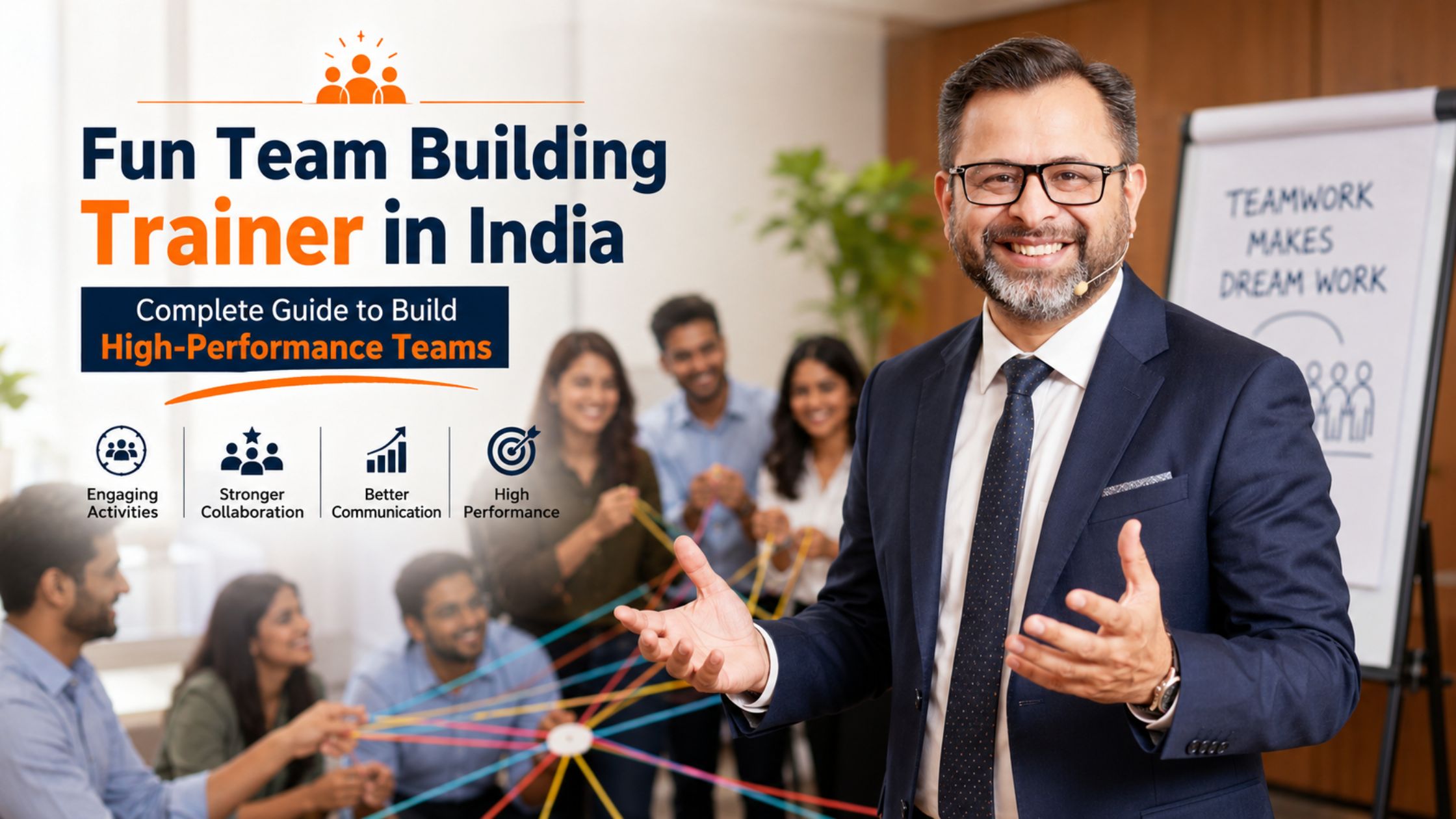
Fun Team Building Trainer in India | Management Games & Activities Guide

Fun Team Building Trainer in India (Complete Guide to Build High-Performance Teams)
Introduction

Regardless of how compelling your company concept is, the key to success is this:

πŸ‘‰ Your group

In India, a lot of companies have trouble with:

Workers not accepting accountability

Insufficient departmental coordination

Low output

Ineffective communication

Consequently:

πŸ‘‰ Growth slows down

πŸ‘‰ business owners experience more stress.

In this reason, businesses are looking for the greatest team building management gamesβ€”someone who can turn a group of workers into a high-performing team.

This guide will teach you:

βœ” What a team building trainer performs,

βœ” why team building is crucial

βœ” how to pick the best trainer

βœ” how to create a solid team for sustained success

What Is the Role of a Fun Team Building Trainer?

Organizations benefit from a fun team building activities trainer.

Enhance cooperation and team spirit

Increase employee trust

Improve dialogue

Boost output

They carry out:

βœ” Workshops

βœ” Activities

βœ” Training sessions

βœ”Β  Business initiatives

The Significance of Team Building for Business Development

Without a capable team:

❌ Work is delayed

❌ Conflicts escalate,

❌ productivity declines

❌ The owner becomes overburdened.

With a powerful group:

βœ” Work becomes easier

βœ” employees take responsibility

βœ”Β  growth accelerates.

Typical Business Team Difficulties

The majority of businesses deal with these problems:

1. Insufficient Communication

Teams don’t communicate information effectively.

2. No Responsibility

Workers shirk accountability

3. Inadequate Coordination

Departments don’t collaborate.

4. Low Inspiration

Workers feel alienated

This is where a team building facilitator plays a crucial role.

Team Building Trainer Types

1. Trainers Based on Activities

Concentrate on enjoyable activities and games

πŸ‘‰ Good for engagement

❌ Limited long-term impact

2. Corporate Instructors

Concentrate on developing your skills

πŸ‘‰ Boost communication and leadership skills

3. The Best Option: Business Coaches + Team Trainers

πŸ‘‰ Integrate strategy with activity

πŸ‘‰ Pay attention to systems and responsibility

πŸ‘‰ Provide long-term outcomes

Effective Team-Building Games

Many businesses simply concentrate on enjoyable activities.

However, good team building consists of:

πŸ”Ή Team Building Management Games

Activities that are organized and have learning objectives

πŸ”Ή Solving Real-World Issues

Activities based on real-world business difficulties

πŸ”Ή Communication Activities

Increasing precision and synchronization

πŸ”Ή Leadership Tasks

Developing the ability to make decisions

πŸ‘‰ Glass walks and fire walks are two other hobbies that help foster trust and confidence.

Characteristics of India’s Top Team Building Instructor

Prior to choose a trainer, make sure to:

βœ” Real-World Business Experience

They ought to comprehend actual difficulties.

βœ” The Method of Structured Training

Real learning, not just games

βœ” Concentrate on Execution

Long-term development rather than momentary enjoyment

βœ” Verified Outcomes

Examine case studies and testimonies.

The Biggest Error Businesses Make

The majority of companies invest in:

πŸ‘‰ One-day excursion as a team

But disregard:

❌ Systems

❌ Training

❌ Follow-up

Result?

πŸ‘‰ Not much progress

What Constitutes High-Performance Teams?

In order to build a solid squad, you must:

πŸ”Ή Clearly defined roles and responsibilities

Everyone ought to be aware of their task.

πŸ”Ή Accountability Mechanisms

Regularly monitor performance.

πŸ”Ή Training Courses

Constant learning

πŸ”Ή Leadership Training

Robust leaders lead robust teams.

System-Driven Team Building: The True Answer

Contemporary companies are moving in the direction of:

πŸ‘‰ System-based team building

This comprises:

Standard Operating Procedures (SOPs)
Tracking systems for performance
Frequent instruction
Organized communication
Result:

βœ” Β Increased output

βœ”Β  Reduced confusionΒ 

βœ” Quicker growth

Why Companies Select Sushil Arora

You need someone who goes beyond activities if you’re searching for India’s top team-building trainer.

What distinguishes him?

πŸ‘‰ Put system-driven team building first

πŸ‘‰ Assists in building responsible teams

πŸ‘‰ offers useful, doable tactics

πŸ‘‰ works closely with entrepreneurs

How His Training Solves Real Problems

Problem: The team isn’t cooperating

πŸ‘‰ Solution: Structured communication system.

Problem: Workers not accepting accountability

πŸ‘‰ Solution:The accountability framework.

Problem: Low output

πŸ‘‰ Solution:Training along with process enhancement.

Problem: Overworked owner

πŸ‘‰ Delegation and team mechanisms.

A Team Building Trainer: Who Should Hire Them?

This is perfect for:

Entrepreneurs
Corporate businesses
Startups
Expanding groups

How to Pick the Best Team-Building Instructor

Adhere to this checklist:

βœ” Describe your objective:Β 

team building? Leadership? Productivity?

βœ” Verify your experience

Real-world business exposure is important.

βœ” Concentrate on results

Not only enjoyable pursuits

βœ” Seek for long-term worth.

Instruction plus execution

FAQs
1. What is the role of a team building trainer?

πŸ‘‰ They enhance productivity, collaboration, and communication.

Q2. Do team-building games work?

πŸ‘‰ Yes, particularly in conjunction with organized training.

Q3. How much does it cost to hire a team-building trainer in India?

πŸ‘‰ Depending on the program, it might range from β‚Ή30,000 to β‚Ή3,000,000.

Q4. What is the most effective team-building activity?

πŸ‘‰ activities that blend enjoyment, education, and practical business application.

Conclusion

Developing a solid team is crucial for the development of any organization.

Selecting the best team-building instructor can assist you:

βœ” Enhance team productivity

βœ” foster responsibility

βœ” lessen stress

βœ” grow your company more quickly.

But keep in mind:

πŸ‘‰ While procedures provide outcomes, fun activities inspire engagement.

Ready to Build a High-Performance Team?

If you’d like:

βœ” Build a system-driven company

βœ” Boost productivity

βœ” Develop a solid and responsible teamΒ 

πŸ‘‰ Go to https://sushilarora.com/

Start transforming your team today.

0