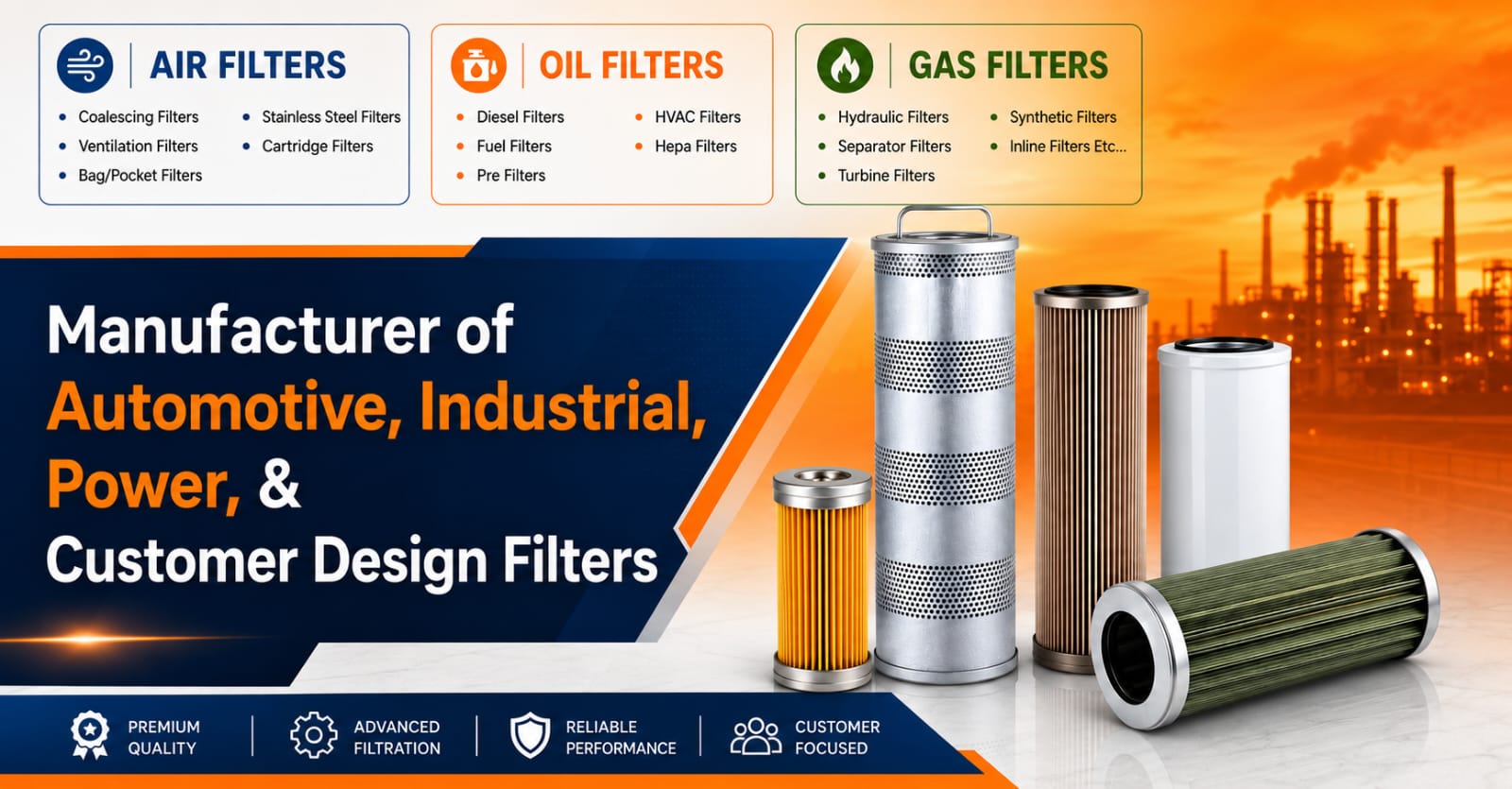
Introduction
The automotive industry depends on reliable components to ensure vehicle performance, efficiency, and long-term durability. Among these essential components, automotive filters play a crucial role in protecting engines and maintaining clean air and fluids throughout a vehicle’s systems. An experienced automotive filter manufacturer develops and produces filtration solutions that help vehicles operate efficiently while reducing wear, contamination, and maintenance costs.
From oil and air filters to fuel and cabin air filters, manufacturers serve a wide range of automotive applications. As vehicle technology continues to evolve, the demand for high-quality filtration products is increasing across passenger cars, commercial vehicles, heavy-duty trucks, and industrial machinery.
What Does an Automotive Filter Manufacturer Do?
An automotive filter manufacturer specializes in designing, engineering, testing, and producing filters used in vehicles. These companies work with filtration materials, precision components, and advanced manufacturing processes to develop products that meet specific performance requirements.
Manufacturing activities typically include material selection, filter media processing, pleating, assembly, sealing, quality inspection, and product testing. Manufacturers may also develop customized filtration solutions for original equipment manufacturers (OEMs), aftermarket distributors, automotive workshops, and fleet operators.
A reliable manufacturer focuses on filtration efficiency, consistent product quality, durability, and compatibility with different vehicle models. These factors help ensure that filters perform effectively under varying operating conditions.
Types of Automotive Filters
Automotive filters serve different purposes depending on the vehicle system they protect.
1. Automotive Air Filters
Engine air filters prevent dust, dirt, pollen, and other airborne particles from entering the engine. Clean intake air supports efficient combustion and helps reduce engine wear. Automotive filter manufacturers produce air filters in various shapes and sizes to accommodate different engine designs and vehicle requirements.
2. Oil Filters
Oil filters remove contaminants, metal particles, and other impurities from engine oil. By maintaining cleaner oil, these filters help protect moving engine components and support reliable lubrication. Manufacturers must consider filtration efficiency, pressure resistance, sealing quality, and service life when designing oil filters.
3. Fuel Filters
Fuel filters remove particles and contaminants from petrol or diesel before they reach sensitive fuel-system components. Effective fuel filtration helps protect injectors, pumps, and other components from contamination-related damage. Diesel applications may require specialized filtration and water-separation capabilities.
4. Cabin Air Filters
Cabin air filters help improve the quality of air entering a vehicle’s passenger compartment. Depending on their construction, they can capture dust, pollen, and other airborne particles. Some versions use activated carbon to help reduce certain odors and gaseous contaminants.
5. Hydraulic and Transmission Filters
Some automotive and commercial vehicle applications require specialized filters for hydraulic systems and transmissions. These products help control contamination, protect precision components, and support reliable system operation.
Importance of Quality in Automotive Filter Manufacturing
Quality is one of the most important factors when selecting an automotive filter manufacturer. Poorly designed or incorrectly manufactured filters may provide inadequate filtration, restrict necessary flow, or develop sealing problems. https://fasttecheng.com/product-automotive-filters.html
Reliable manufacturers use suitable filtration media, durable housing materials, accurate dimensions, and dependable sealing components. They also conduct inspections and performance tests to verify that products meet their intended specifications.
Quality assurance may include checking dimensional accuracy, leakage resistance, pressure performance, filtration efficiency, and structural strength. Manufacturers serving regulated markets may also need to meet relevant industry standards and customer-specific requirements.
Consistent quality helps distributors, repair shops, and vehicle owners reduce the risk of premature component wear and unnecessary maintenance expenses.
Advanced Technology in Filter Production
Modern automotive filter manufacturers increasingly rely on automation, precision machinery, and improved filtration materials. Automated pleating and assembly equipment can improve production consistency, while advanced inspection systems help identify defects.
Research into synthetic filtration media, multilayer materials, and improved filter designs supports the development of products that balance filtration efficiency with airflow or fluid-flow requirements.
Manufacturers must also adapt to changing automotive technologies. Hybrid and electric vehicles may require specialized cabin, coolant, lubrication, and other system-specific filtration products, depending on their design. This creates opportunities for manufacturers to develop new solutions for evolving vehicle platforms.
How to Choose the Right Automotive Filter Manufacturer
Selecting the right manufacturing partner requires careful evaluation of several factors.
Product range: Choose a manufacturer that supplies the filter types and vehicle applications you require.
Quality assurance: Review testing procedures, documented specifications, and applicable certifications.
Manufacturing capacity: Ensure the supplier can meet your required order volumes and delivery schedules.
Customization: Consider whether the manufacturer offers private labeling, OEM production, or application-specific designs.
Technical support: Reliable communication and accurate product information help simplify sourcing and installation.
Pricing and availability: Compare overall value, consistency, and delivery reliability rather than focusing only on the lowest price.
Businesses should also verify product compatibility using vehicle identification details, manufacturer references, or approved application catalogs.
Sustainability in Automotive Filter Manufacturing
Environmental responsibility is becoming increasingly important across the automotive supply chain. Manufacturers are exploring ways to reduce material waste, improve energy efficiency, and optimize production processes.
Depending on the application, opportunities may include recyclable packaging, responsible material sourcing, efficient manufacturing equipment, and designs that simplify waste management. Manufacturers must balance sustainability goals with the filtration performance, durability, and safety requirements of each product.
Conclusion
An automotive filter manufacturer plays a vital role in protecting vehicle systems, supporting engine performance, and maintaining filtration quality. From air and oil filters to fuel, cabin, and specialized hydraulic filters, these products help reduce contamination and support dependable vehicle operation.
By investing in modern production technology, rigorous quality control, and continuous product development, manufacturers can meet the changing needs of automotive businesses and vehicle owners. Choosing a reliable manufacturing partner helps ensure consistent product quality, suitable vehicle compatibility, and long-term value throughout the automotive supply chain.
0
0
0
0
Rate this business
Have you heard of this business? Do you like it? How do you like it?
Check out if it is in the list of Top Rated Small Businesses