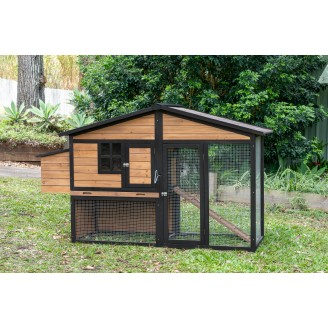
Quick Answer: A chook house is a secure, weatherproof shelter that gives hens a safe place to roost, lay, and stay protected from predators and extreme weather. The right chook house includes strong ventilation, predator-proof mesh, weatherproof roofing, and enough space for your flock to move comfortably.
If you’re new to keeping chickens — or upgrading an old setup — choosing the right chook house is the single most important decision you’ll make. It affects your hens’ health, how much time you spend on maintenance, and even how consistently they lay. This guide covers exactly what to look for.
Why a Good Chook House Matters
Quick Answer: A well-built chook house protects your flock from predators, regulates temperature, and prevents the damp, ammonia-heavy conditions that lead to illness. A poor one increases stress, disease risk, and predator losses.
Hens spend most of their time in and around their housing, especially overnight while roosting. If airflow is poor, moisture builds up fast, raising the risk of respiratory problems. If the structure isn’t secure, predators like foxes and snakes can get in within minutes of finding a weak point.
A quality chook house needs to deliver on three fronts:
- Protection from weather and predators
- Comfort through proper roosting bars and nesting boxes
- Hygiene via a design that’s genuinely easy to clean
What to Look for When Buying a Chook House
Quick Answer: Prioritise ventilation, predator-proof mesh, sealed roofing, and easy-clean features — these four factors have the biggest impact on your flock’s health and your ongoing workload.
Ventilation
Vents near the roofline let hot, humid air escape without creating draughts where hens roost. This is especially important in warmer regions, where poor airflow can quickly become dangerous.
Predator-Proofing
Check for:
- Galvanised mesh with gaps no wider than a few centimetres
- Secure, animal-proof latches
- Reinforced or buried mesh around the base
- Weatherproof Roofing
Look for roofing that’s genuinely sealed, not just water-resistant. This matters most during storm season, when a poorly sealed roof can quickly lead to damp bedding and mould.
Easy-Clean Design
Removable droppings trays and accessible nesting boxes cut cleaning time and reduce the buildup of ammonia and parasites between cleans.
Wooden Chicken Coops vs. Metal Chook Houses
Wooden chicken coops generally insulate better and are easier to repair, while metal chook houses are lower maintenance but can overheat in direct sun without added shade.
Timber naturally regulates temperature, keeping hens cooler in summer and warmer in winter. It’s also simple to patch or extend if you want to add nesting boxes later. Metal is easier to hose down and requires less upkeep, but it heats up quickly under direct sun, so shade becomes essential in warmer climates.
Most backyard keepers in variable Australian conditions find that well-ventilated wooden chicken coops perform more consistently across the seasons than metal alternatives.
Sizing Your Chook House Correctly
Allow around 0.3–0.4 square metres of coop floor space per bird, plus 1–2 square metres of run space, and choose slightly larger than your current flock if you plan to expand.
- 2–4 hens: A compact chook house suits most suburban backyards
- 5–8 hens: A mid-sized coop with a larger attached run
- 8+ hens: A full-size setup with separated roosting and nesting zones
Overcrowding is one of the leading causes of stress-related pecking and reduced egg production, so it’s worth leaving room to grow.
Buying Chicken Coops for Different Climates
Buyers searching for chicken coops SEQ or other warm, humid regions should prioritise ventilation, drainage, and shade, since heat and moisture create different risks than cooler, drier climates.
In warmer, storm-prone areas, elevated flooring or good drainage helps prevent dampness after heavy rain, while extra shade — either natural or a shade cloth — reduces heat stress during summer. If you’re comparing chicken coops SEQ options, look specifically for coops designed with airflow and drainage front of mind, rather than a generic build.
Common Mistakes to Avoid
- Buying a coop sized only for your current flock, with no room to grow
- Overlooking mesh gauge and gaps around the base
- Assuming “water-resistant” roofing is the same as fully sealed
Skipping shade planning in hotter climates
Setting Up Your Chook House for Long-Term Success
- Place the coop on elevated, well-drained ground to avoid pooling water
- Provide partial shade for the hottest part of the day
- Check latches, hinges, and mesh weekly for wear
Refresh bedding regularly to manage odour and ammonia buildup
Frequently Asked Questions
What’s the difference between a chook house and a chicken coop? The terms are used interchangeably in Australia. Both describe the structure housing your hens, including roosting bars, nesting boxes, and protective mesh or walls.
Are wooden chicken coops better than metal chook houses? Wooden chicken coops generally offer better natural insulation and are easier to repair or extend, while metal options are lower maintenance but can overheat without added shade.
How much space does a chook house need per bird? Allow roughly 0.3–0.4 square metres of coop floor space per bird, plus 1–2 square metres of run space, to reduce overcrowding and stress.
What should buyers in warmer climates look for, like chicken coops SEQ? Prioritise strong ventilation, good drainage, sealed roofing, and shade options, since humidity and storm exposure create different risks than cooler regions.
How often should a chook house be cleaned? Clean droppings trays weekly, and do a full bedding change and deeper clean monthly to keep ammonia levels low and reduce disease risk.
Final Thoughts
A quality chook house is one of the best investments you can make in your flock’s health and your own peace of mind. Focus on ventilation, predator-proofing, and appropriately sized space, whether you’re choosing timber or metal, and your hens will reward you with steady laying and far less day-to-day stress.
Ready to find the right chook house for your backyard? Explore the full range of chicken coops at Coops and Hutches Direct and give your flock a home built to last.
Rate this business
Have you heard of this business? Do you like it? How do you like it?
Check out if it is in the list of Top Rated Small Businesses