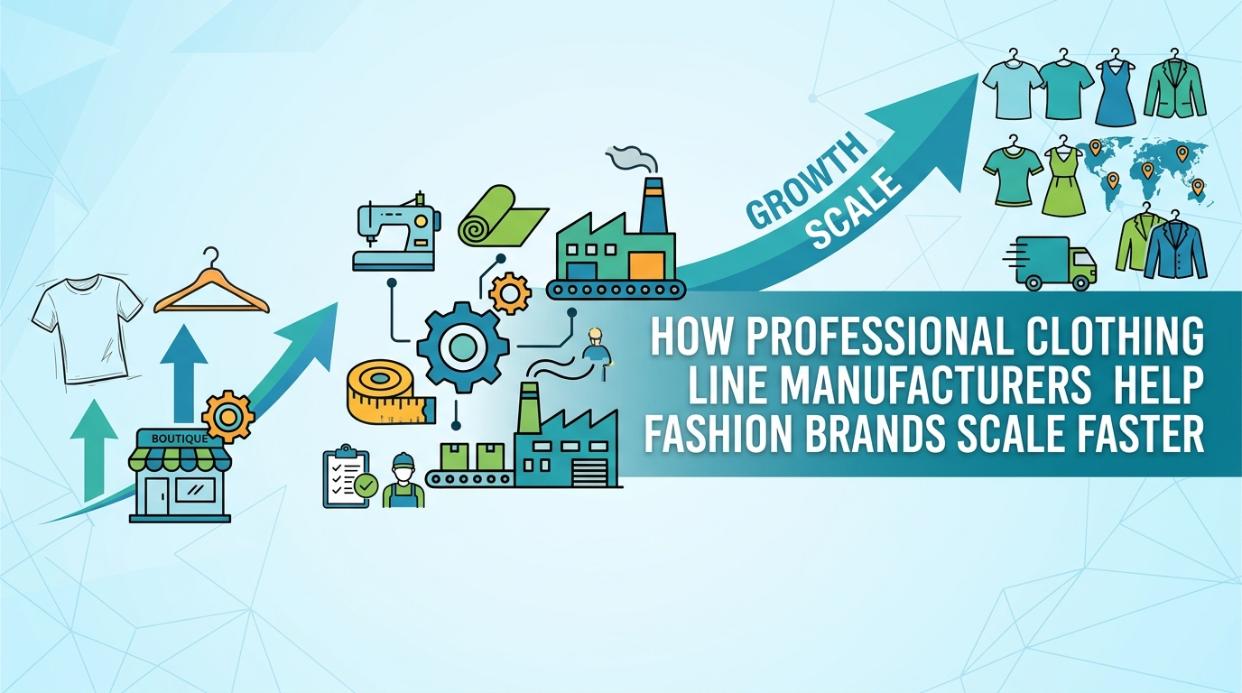
Building a successful fashion brand requires much more than creative designs and effective marketing. While branding and customer engagement play essential roles, sustainable growth ultimately depends on having a reliable manufacturing partner capable of producing high-quality products at scale. As consumer expectations continue to evolve and competition intensifies, fashion brands need manufacturers who can consistently deliver superior craftsmanship, flexible production capacity, and dependable turnaround times.
Whether you’re launching a premium apparel label, expanding an established fashion company, or introducing private-label collections, selecting the right manufacturing partner directly impacts product quality, customer satisfaction, and profitability. Professional manufacturers simplify complex production processes, reduce operational risks, and enable brands to focus on innovation, marketing, and business growth instead of production challenges.
Why Manufacturing Partners Matter More Than Ever
The modern apparel industry operates in an environment where trends emerge overnight, consumer preferences change rapidly, and retail channels demand faster replenishment cycles. Fashion businesses that attempt to manage inconsistent production often struggle with delayed launches, inventory shortages, quality issues, and rising operational costs.
Professional clothing line manufacturers provide comprehensive production solutions that extend well beyond sewing garments. Their expertise includes sourcing premium fabrics, creating accurate production samples, managing quality assurance, optimizing manufacturing efficiency, and ensuring products meet international compliance standards.
Experienced manufacturers also provide valuable guidance during product development by recommending suitable materials, improving construction methods, reducing unnecessary production costs, and identifying opportunities to streamline manufacturing without compromising quality.
The Benefits of Partnering with Experienced Manufacturers
Fashion businesses that invest in long-term manufacturing relationships often experience measurable improvements across every stage of production.
- Consistent product quality across every production run.
- Scalable manufacturing capacity for seasonal demand.
- Reduced production delays and improved lead times.
- Access to experienced technical teams.
- Lower production costs through efficient operations.
- Improved compliance with international manufacturing standards.
- Better inventory planning and forecasting.
Rather than constantly searching for new suppliers, growing brands benefit from a dependable manufacturing ecosystem that evolves alongside their business objectives.
Scalability Is the Foundation of Fashion Growth
One of the biggest challenges facing emerging fashion labels is transitioning from small production runs to commercial-scale manufacturing. What works for producing hundreds of garments often becomes inefficient when demand reaches thousands of units.
Professional manufacturers are equipped with scalable production systems that allow brands to increase output without sacrificing quality or delivery schedules. Their facilities typically include multiple production lines, specialized machinery, trained quality inspectors, and established supplier networks capable of supporting rapid expansion.
This scalability becomes particularly valuable during seasonal launches, promotional campaigns, wholesale partnerships, and unexpected sales spikes when inventory must be replenished quickly.
Beyond Apparel: Expanding into High-Margin Accessories
Many successful fashion brands eventually discover that relying solely on apparel limits revenue potential. Clothing involves multiple size variations, seasonal inventory challenges, and higher product return rates due to fit preferences.
Accessories provide an excellent opportunity to diversify revenue streams while strengthening brand identity. Unlike apparel, many accessories require no sizing, appeal to broader audiences, and often enjoy higher profit margins.
One increasingly popular category is compact everyday carry products designed for commuters, students, and travelers. Brands looking to introduce stylish and practical accessories often source bulk cross body bags to complement their apparel collections. These products offer excellent branding opportunities through custom materials, hardware finishes, embroidery, and logo applications while serving customers with functional, everyday utility.
Expanding into accessories also increases average order value, encourages repeat purchases, and creates additional cross-selling opportunities across online and retail channels.
Quality Control Creates Long-Term Customer Loyalty
Consumers today have endless purchasing options. Poor stitching, inconsistent sizing, fabric defects, or delayed deliveries can permanently damage brand reputation.
Professional manufacturers implement multiple quality assurance checkpoints throughout production rather than relying solely on final inspections. These quality control measures often include:
- Raw material inspections before production begins.
- Sample approvals before bulk manufacturing.
- In-line production monitoring.
- Final inspection using AQL standards.
- Packaging verification before shipment.
- These systematic inspections significantly reduce defects while ensuring every shipment maintains consistent quality standards.
Why Tote Bags Continue to Grow in Popularity
Tote bags have evolved from simple utility products into fashionable everyday essentials. Consumers use them for work, shopping, travel, school, fitness, and casual outings, making them one of the most versatile accessory categories available.
Modern consumers expect premium construction featuring reinforced stitching, durable fabrics, organized compartments, and attractive finishes. Manufacturers with accessory expertise understand how to engineer products capable of handling daily wear while maintaining a polished appearance.
Fashion brands seeking to expand into practical lifestyle products frequently invest in bulk tote bags because they offer extensive customization opportunities. Businesses can incorporate branded prints, embroidery, eco-friendly materials, premium linings, zipper closures, and customized handles to create products that seamlessly align with their existing collections.
Since tote bags appeal to nearly every demographic, they remain valuable products for retail stores, promotional campaigns, corporate gifting, and ecommerce businesses alike.
Technology Is Driving Demand for Functional Fashion
The rise of hybrid work environments, digital entrepreneurship, and remote careers has transformed consumer buying habits. Today’s professionals carry laptops, tablets, chargers, notebooks, and accessories everywhere they go.
This shift has increased demand for premium laptop bags that combine protective functionality with modern fashion aesthetics. Unlike standard backpacks, professional laptop bags require specialized construction techniques including padded compartments, reinforced stitching, water-resistant materials, ergonomic shoulder straps, and secure organizational features.
Brands looking to capitalize on this growing market often work with manufacturers capable of producing bulk laptop bags designed for professionals, students, and business travelers. These products not only diversify product catalogs but also position brands within the expanding lifestyle and business accessories market.
Steps to Successfully Scale Your Fashion Brand
Growth requires careful planning and consistent execution. Following a structured manufacturing process improves efficiency while reducing costly mistakes.
- Develop comprehensive technical packs with accurate measurements and specifications.
- Review and approve production samples before bulk manufacturing begins.
- Establish clear quality expectations using recognized inspection standards.
- Create realistic production schedules aligned with seasonal launches.
- Monitor inventory levels and sales performance to optimize reorders.
- Expand into complementary product categories that strengthen brand identity.
- Maintain continuous communication with manufacturing partners to address challenges proactively.
By implementing these practices, fashion businesses position themselves for sustainable long-term growth while maintaining consistent product quality and customer satisfaction.
The Competitive Advantage of Long-Term Manufacturing Partnerships
Manufacturing should never be viewed as a transactional relationship. The strongest fashion brands treat manufacturers as strategic partners invested in their success.
Long-term partnerships create deeper collaboration, improved production forecasting, faster problem-solving, greater product consistency, and increased innovation. Manufacturers become familiar with brand standards, preferred materials, customer expectations, and future growth plans, enabling them to deliver increasingly efficient production solutions over time.
As businesses expand internationally or introduce new product categories, experienced manufacturing partners provide the operational stability necessary to support sustainable scaling while protecting brand reputation.
Frequently Asked Questions (FAQs)
What does a professional clothing manufacturer typically provide?
Professional manufacturers typically offer product development, sourcing, sampling, production, quality assurance, packaging, and logistics support to help brands efficiently bring products to market.
How do manufacturers help brands grow faster?
They improve production efficiency, maintain consistent quality, increase manufacturing capacity, reduce operational risks, and enable businesses to focus on sales, branding, and customer acquisition.
Why should apparel brands diversify into accessories?
Accessories often generate higher margins, require fewer size variations, experience lower return rates, and provide additional opportunities for cross-selling and customer retention.
How important is quality control in apparel manufacturing?
Quality control ensures consistency across production runs, minimizes defects, protects brand reputation, and improves customer satisfaction through reliable product performance.
Take Your Fashion Brand to the Next Level
Scaling a fashion business successfully requires far more than great designs—it demands dependable production, consistent quality, and strategic product expansion. By partnering with experienced manufacturing professionals and diversifying into complementary accessories, brands can strengthen their market presence, improve operational efficiency, and create new revenue opportunities. Investing in reliable manufacturing relationships today lays the foundation for long-term growth, stronger customer loyalty, and sustained success in the competitive fashion industry.
Rate this business
Have you heard of this business? Do you like it? How do you like it?
Check out if it is in the list of Top Rated Small Businesses