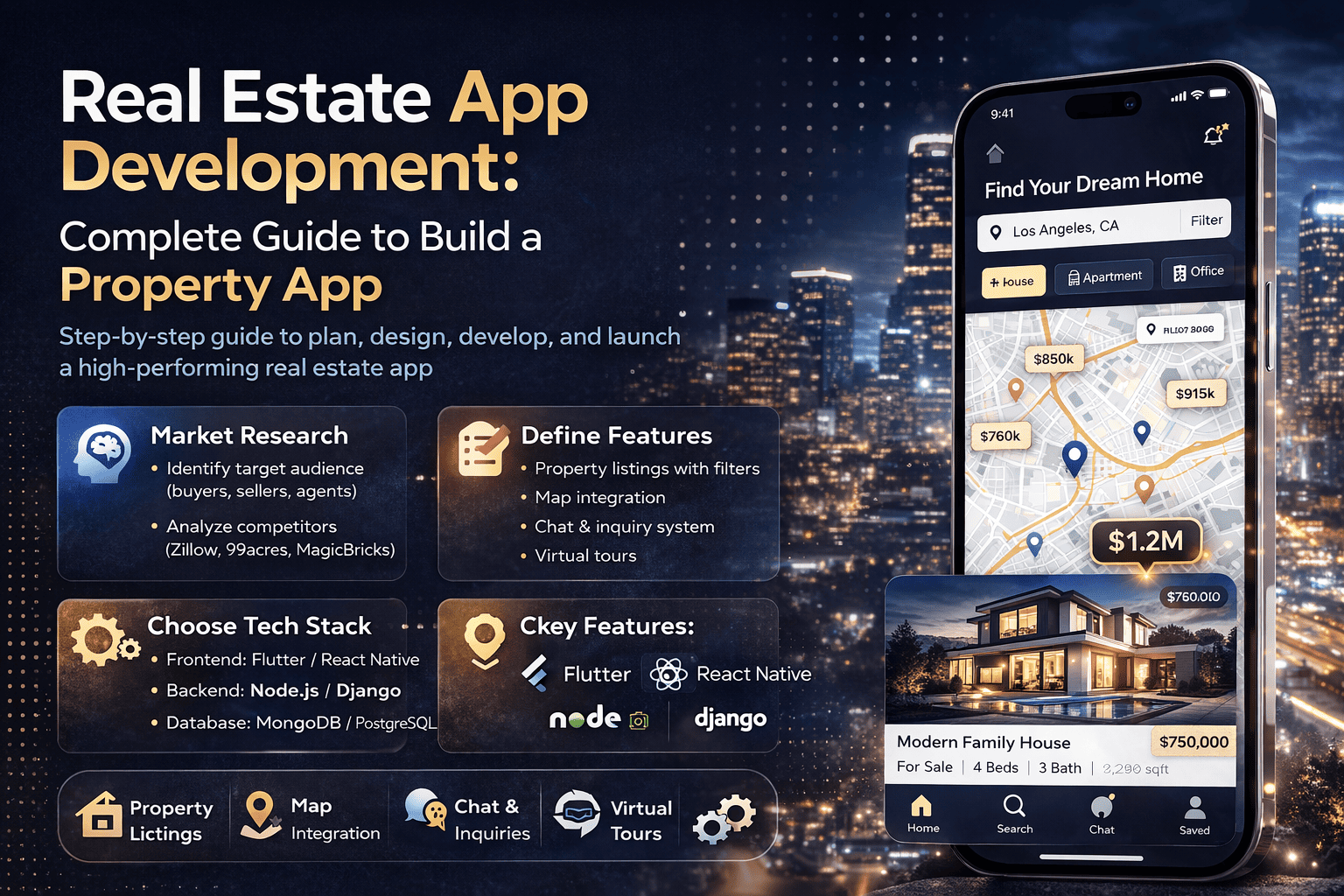
The way people buy, sell, and rent properties has completely changed in the last few years. Gone are the days when someone had to visit multiple locations, deal with brokers, and spend weeks searching for the right property. Today, everything is just a few taps away on a smartphone. This shift has made real estate app development one of the most powerful opportunities for businesses looking to grow in the digital space.
If you’ve ever used apps like property listing platforms, you already know how convenient they are. But building such an app is not just about listing properties it’s about creating an experience that users trust and rely on.
Understanding Real Estate App Development
At its core, real estate app development is about building a platform where users can explore, compare, and finalize properties without unnecessary hassle. It connects buyers, sellers, and agents in a single digital ecosystem.
But what makes modern real estate apps different is how smart they have become. With technologies like location tracking, AI-based recommendations, and virtual tours, users can now make decisions faster and more confidently than ever before.
Why Real Estate Apps Are Becoming Essential
Think about it from a user’s perspective. If someone is looking for a property, would they prefer visiting 10 different locations physically or scrolling through hundreds of verified listings from their phone? The answer is obvious.
This convenience is the biggest reason behind the rising demand for real estate apps. People want quick results, better options, and complete transparency and apps deliver exactly that.
For businesses, this shift is even more valuable. A real estate app doesn’t just improve customer experience; it also opens doors to new revenue opportunities. From featured listings to premium subscriptions, there are multiple ways to generate income while providing value to users.
Choosing the Right Type of Real Estate App
Before jumping into development, it’s important to decide what kind of app you want to build. Not every app serves the same purpose.
Some apps focus purely on property listings, allowing users to browse homes based on location, budget, and preferences. Others are designed specifically for agents, helping them manage leads, listings, and client communication more efficiently.
Then there are property management apps, which are more useful for landlords who want to handle rent, maintenance, and tenant communication in one place.
The key is to clearly define your target audience. When you know who you’re building for, the entire development process becomes much smoother.
What Makes a Real Estate App Successful?
A successful real estate app is not just about features it’s about how those features solve real problems.
For example, search functionality is one of the most important parts of any property app. Users should be able to filter results based on their exact needs, whether it’s price, location, or property type. If searching feels complicated, users won’t stay.
Visual content also plays a huge role. High-quality images and videos help users connect with a property even before visiting it. And when you add virtual tours into the mix, the experience becomes even more immersive.
Another important aspect is communication. Users should be able to directly contact property owners or agents without any friction. A simple in-app chat feature can make a huge difference here.
Going Beyond Basics with Advanced Features
If you really want your app to stand out, you need to think beyond basic features. Modern users expect smart experiences.
Imagine an app that suggests properties based on user behavior or preferences that’s where AI comes in. Or think about virtual reality tours where users can walk through a property without leaving their home.
Even small additions like a mortgage calculator or real-time notifications can improve the overall user experience significantly.
These features not only make your app more attractive but also increase user engagement and retention.
Understanding the Cost of Development
One of the most common questions businesses ask is, “How much will it cost to build a real estate app?”
The truth is, there’s no fixed answer. The cost depends on what you want to build.
A simple app with basic features will obviously cost less. But if you’re planning to include advanced features like AI recommendations, virtual tours, or multi-platform support, the cost will increase.
That’s why proper planning is so important. When you clearly define your goals and features, you can manage your budget more effectively and avoid unnecessary expenses.
The Development Journey
Building a real estate app is a step-by-step process, and each step plays an important role.
It all starts with research understanding your audience, studying competitors, and identifying gaps in the market. This helps you create a strong foundation for your app.
Next comes design. A clean, simple, and user-friendly interface can make or break your app. Users should feel comfortable navigating through it without confusion.
Once the design is ready, the actual development begins. This is where your idea turns into a functional product. But even after development, the job is not done. Testing is crucial to ensure everything works smoothly.
Finally, after launching the app, marketing becomes the key to success. Without proper promotion, even the best apps can go unnoticed.
Challenges You Should Be Ready For
Like any digital product, real estate apps also come with their own set of challenges.
The competition is intense, so standing out requires a strong strategy. Data accuracy is another critical factor users expect reliable and up-to-date information.
Security is also a major concern, especially when dealing with user data and transactions. Building trust is essential if you want users to stay on your platform.
What the Future Looks Like
The future of real estate apps is incredibly exciting. Technologies like artificial intelligence, blockchain, and augmented reality are set to transform the industry even further. At the same time, related sectors such as lending software development are also evolving rapidly, making property financing faster, smarter, and more accessible for users.
Apps will become smarter, faster, and more personalized. Users will expect seamless experiences not just in property search but also in financial processes like loans and approvals. Businesses that adapt to these changes early will have a clear advantage in this competitive market.
Final Thoughts
Real estate is no longer just about physical locations it’s about digital experiences. With the right approach, real estate app development can help you create a platform that not only meets user expectations but exceeds them.
The key is to focus on solving real problems, delivering value, and continuously improving your app based on user feedback.
If done right, your app can become more than just a tool it can become a trusted platform that users rely on every day.
0
Rate this business
Have you heard of this business? Do you like it? How do you like it?
Check out if it is in the list of Top Rated Small Businesses